About Turkey


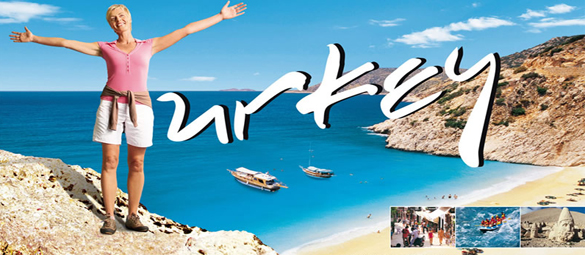
Turkey is the paradise of sun, sea, mountains, lakes that offers the vacationer a complete change from the stress rouitine of everyday life,from May to October most places in turkey have ideal climate that is perfect for holiday and relaxing,sandy beaches or enjoying the fresh wheather of mountains and lakes.


Turkey also has a magnificent past and is a land full of historic treasures from 13 successive civilazitions spanning years,even if you spend only short time in Turkey you can see alot of this great heritage.There is no doubt that one visit will not be enough and you will want to come back again and again as you discover.All of them no matter how different, have one thing in common; the frendly and hospitable people of this unique code.


The cost of living in Turkey is also very reasonable – perhaps 30 to 50 per cent cheaper than the UK. All in all, Turkey has a great deal to offer the British buyer – be it for investment, retirement or just a holiday home.


Home

Kalkan Property

Antalya Property

Off Plan & Land

Construction & Design


News

About Turkey

About Kalkan

Around Kalkan

Buying in Turkey

Living in Turkey

Kalkan & Turkey Maps

Useful Links

About Us

Contact Us


Geography

The lands of Turkey are located at a point where the three continents making up the old world, Asia, Africa and Europe are closest to each other.

Turkey is situated on an area where Europe meets Asia, creating a link between these two continents. The European part of the country is called Thrace, while the Asian part is known as Anatolia (or Asia Minor). It is bordered to the northwest by Greece and Bulgaria, to the east by the former USSR (Georgia, Armenia, and Azerbaijan Republics) and Iran, and to the south by Iraq and Syria.

The Turkish peninsula is bathed by four seas: the Mediterranean to the south, the Aegean to the west, the Sea of Marmara between the European and Asian land masses, and the Black Sea to the north. The entire coastline spans more than 8,000 kilometers (approximately 5,000 miles) in length.

Because of its geographical location the mainland of Anatolia has always found favour throughout history, and is the birthplace of many great civilizations. It has also been prominent as a center of commerce because of its land connections to three continents and the sea surrounding it on four sides.

Location:
Map

Southwestern Asia (that part west of the Bosphorus is included with Europe), bordering the Black Sea, between Bulgaria and Georgia, and bordering the Aegean Sea and the Mediterranean Sea, between Greece and Syria.


Area:

Total area:

780,000 square km (300,000 square miles)

Land area:

770,760 square km

Thrace (Europe):

23,764 square km.

Anatolia (Asia):

755,688 square km.

Max. length:

1,565 km.

Average width:

550km.


Coastline:

Total:

8,372 km.

Aegean:

2,805 km.

Mediterranean:

1,577 km.

Black Sea:

1,695 km.

Marmara:

927 km.


Land Boundaries:

Total:

2,753 km.

Syria:

877 km.

Former USSR
(Georgia, Armenia, Nakhitchevan);

610 km

Iran:

454 km.

Iraq:

331 km.

Bulgaria:

269 km.

Greece:

212 km.


Land Use:

Arable land:

30%

Permanent crops:

4%

Meadows and pastures:

12%

Forest and woodland:

26%

Other:

28%


Lakes:

Total:

9,423 square km.

In order of size:

Van, Tuz Golu (Salt Lake), Beysehir, Egridir, Aksehir, Iznik, Burdur, Manyas, Acigol, Ulubat (Apolyont).


Mountains

Max. altitude:

Mt. Ararat

5,165 m.

Kackar

3,923 m.

Erciyes

3,917 m.

B Hasan

3,268 m.

Nemrut

2,282 m.

Uludag (Mt. Olympus)

2,543 m.

Average altitude

1,131 m.

Land above 500 m. altitude

80%


Rivers:

Firat (Euphrates)

1,263 km. (in Turkey)

Kizilirmak

1,182 km.

Sakarya

824 km.

Murat

722 km.

Seyhan

560 km.

Menderes (Meander)

584 km.

Dicle (Tigris)

523 km. (in Turkey)

Yesilirmak

519 km.

Ceyhan

509 km.

Porsuk

488 km.

Coruh

442 km.

Gediz

401 km.


Islands:

Aegean Sea

Gokceada, Bozcaada, Uzunada, Alibey

Marmara Avsa Isles

Eknik, Koyun, Pasalimani

Princess' Isles

Buyukada, Heybeliada, Burgaz, Kinali, Sedef,

Mediterranean

Karaada, Salih, Kekova


Straits:

Bosphorus

Links Black Sea to Marmara Sea

Dardanelles

Links Marmara Sea to Aegean Sea


Regions:
 

Seven geographical and administrative regions

Marmara,
Aegean,
Mediterranean,
Black Sea,
Central Anatolia,
East Anatolia,
Southeastern Anatolia

Resources

Hydroelectric generators:


(capacity in thousands of megawatts)

Ataturk Dam on Firat

8400

Karakaya Dam on Firat

7,354

Keban Dam on Firat

5,800

Oymapinar Dam on Manavgat

1,920

Gokcekaya Dam on Sakarya

562

Sanyar Dam on Sakarya

400

Hirfanli Dam on Kizilirmak

400


Thermoelectric generators:

Ambarli

4,500

Seyitomer

1,800

Tuncbilek

830

Catalagzi

800

Mersin

700

Sihaltaraga

450


Agricultural output:


(2003 figures)

Wheat

20 million tons

Barley

8.3 million tons

Corn

2.1 million tons

Cotton

2,5 million tons

Tea

152,856 tons

Tobacco

287,500 tons

Hazelnuts

600,000 tons


Natural resources:

Oil, coal, iron ore, copper, uranium, manganese, antimony, chromium, mercury, borate, sulphur, zinc, borax, meerschaum.

Economy

National product:

GDP - purchasing power parity - 238 billion $ (2003 est.)

National product real growth rate:

%5,9

National product per capita:

GDP : 3.366 $ ( for each person)

Inflation rate (consumer prices):

% 24.4

Unemployment rate:

11% (2003)

Exports:

45.7 billion $ (f.o.b., 2003)

Commodities: manufactured products 72%, foodstuffs 23%, mining products 4% (2003)

Partners: Germany 24%, Russia 7%, US 7%, UK 6% (2003)

Imports:

68 billion $ (f.o.b., 2003)

Commodities: manufactured products 71%, fuels 14%, foodstuffs 6% (2003)

Partners: Germany 15%, US 11%, Italy 9%,
Russia 8% (2003)

External debt:

100 billion dolar

Industrial production:

growth rate 7,8% (2003); accounts for 29% of GDP

Electricity:

Capacity:

18,710,000 kW

Production:

129 billion kWh

Consumption per capita:

1,259 kWh (2003)

Industries:

textiles, food processing, mining (coal, chromite, copper, boron), steel, petroleum, construction, lumber, paper.

Agriculture:

accounts for 16% of GDP; products - tobacco, cotton, grain, olives, sugar beets, pulses, citrus fruit, variety of animal products; self-sufficient in food most years.

Currency:

1 new Turkish lira (YTL) = 100 kurus

Exchange rates:
Turkish liras (TL) per US$1 -

1 YTL = 1,5 USD


1 YTL = 2,7 GBP


1 YTL = 1,7 EURO


Fiscal year:

Calendar year

Back to top

Climate

Although Turkey is situated in a geographical location where climatic conditions are quite temperate, the diverse nature of the landscape, and the existence in particular of the mountains that run parallel to the coasts, results in significant differences in climatic conditions from one region to the other. While the coastal areas enjoy milder climates, the inland Anatolian plateau experiences extremes of hot summers and cold winters with limited rainfall.

Climate:

Three climate zones:

Mediterranean:

Hot and dry summers, mild and wet winters

Continental:

Hot and dry summers, cold and harsh winters

Black Sea:

Temperate and wet all year long.


Average Temperatures
By Region (in Celsius):

Mediterranean:

17.2

Eastern Anatolia

8.1

Aegean

4.3

S. East Anatolia

16.0

Central Anatolia

0.7

Black Sea

12.5

Marmara

14.2

People

Population:

1927: 13.6 million;

1940: 17.8 million;

1950: 20.9 million;

1960: 27.7 million;

1970: 35.6 million;

1975: 40.1 million;

1987: 52 million;

1990: 57 million;

1995: 60 million

2003: 70.877 million

Age structure:

0-14 years:

30% (female 10,815,288; male 11,203,723)

15-64 years:

65% (female 18,723,772; male 19,391,037)

65 years and over:

5% (female 1,764,363; male 1,507,343)

Population growth rate:

1.97%

Birth rate:

21 births/1,000 population

Death rate:

6,8 deaths/1,000 population

Infant mortality rate:

45.6 deaths/1,000 live births

Life expectancy at birth:

Total population:

71.48 years

Male:

67 years

Female:

71 years

Total fertility rate:

3.12 children born/woman (2003 est.)

Government and Legal System

Capital:

Ankara

Government type:

Parliamentary democracy with free market economy

Proclamation of the Republic:

29 October 1923

Proclamation of the Constitution:

7 November 1982

Administrative divisions:

81 provinces

Legislative:
Unicameral,

Grand National Assembly with 450 deputies (general elections every 5 years)

Executive:

President (7-year term) and
Council of Ministers, headed by Prime Minister (5-year term).

Judiciary:

Independent, with Constitutional Court supervising conformity of laws to the 1982 Constitution.
Turkish laws have been derived from various European systems, mainly French, Italian, and Swiss.

Last elections:

2002

Right to vote:

At the age of 18

Major international organizations:

UN, NATO, OECD, CSCE (Conference on Security and Cooperation in Europe), UN. European, Parliament, EC (associate member), GATT, Black Sea Economic Cooperation, WHO, IMF, ILO, UNESCO, ECOSOC, FAO, IDB (Islamic Development Bank), INTELSAT, INTERPOL.

Official language:

Turkish

Religions:

Muslim 98%,
Orthodox, Gregorian, Jewish, Catholic, Protestant and other Christian sects: 2%.

Currency:

NEW YTL Turkish lira

Flag:

Red with a vertical white crescent (the closed portion is toward the hoist side) and white five-pointed star centered just outside the crescent opening.

Back to top

Education


Official Language:

Turkish

Alphabet:

Latin Alphabet, since 1928

Academic Year:

September through May/June

Duration of Schooling:

8 Year continious primary education

Compulsory Schooling:

8 years (ages 6-14)

The Principles of the Turkish National Education:
According to the Constitution governing the Republic no one shall be deprived of the right of learning education. Further-more, primary education is compulsory and free in state schools. Except in specially licensed institutions Turkish must be taught as the mother tongue and religions instruction is a compulsory subject in the primary and secondary school curriculum.
The Following are the constitutional principles underlining the Turkish Educational system:

  1. Universality and equality,

  2. Fulfillment of individual and social needs,

  3. Freedom of choice

  4. Right to education

  5. Quality of opportunity

  6. Education for all throughout life

  7. Adherence to Ataturk's reform principles including secularism

  8. Building of democracy

  9. Scientific approach

  10. Co-education

  11. School parent cooperation.


Goals of Turkish National Education:

  1. To achieve 100 percent participation rate in elementary education (95 percent in 1986).

  2. To raise the rate of literacy of the society which has already reached 85 %.

  3. To emphasize technical and vocational education.

  4. To extend comprehensive schools where multi-purpose programs are to be offered to 60 % of the children in secondary schools by the 1995-96 school year.

  5. To take the necessary measures to raise the quality of national education.

  6. To expand the provision of pre-school education so as to meet fully the demand for it.


Educational System - Divisions:
The educational system consists of two main divisions namely "formal" and "non-formal" education. Formal education covers the institutions of "pre-school education", "primary education", "secondary education", and "higher education". "Non-formal education" covers all other educational provision sponsored by the Ministry that occurs outside formal education.

FORMAL EDUCATION:

Pre-School (0-6)
Kindergarten

Primary School (6-14)
Public School
Private Schools
Regional boarding schools
Special Education Schools

Lycees
General Lycees
Science Lycees
Anatolian High Schools

Lycees
General Lycees
Science Lycees
Anatolian High Schools


NON-FORMAL EDUCATION:

Apprenticeship training centers

Public training centers

Practical trade Schools

Adult Technical Training centers


  1. Pre-School Education:
    Pre-
    school education is considered an adjunct to the public education system rather than and integral part of it. Most pre-primary schools are privately operated, though some attached to State primary schools. They are concentrated in the larger towns and cities, where they meet a need arising from the rapidly rising number of working mothers.


  2. Primary Education:
    8 year continious primary education is compulsory for every child as soon as they reach the age of six. Most elementary school students dress similarly in one type of uniform.
    Children who fail to reach the required standard at the end of any year may repeat it, and by this process it is possible for a child to remain in elementary school until the age of 18. Normally, however, the primary phase of basic education ends at age of 15 with award of an Elementary School Certificate (Diploma).


  3. Secondary Education:
    The high school education is for
    three years. The high school programs are not different than the programs in the United States. The main distinction in the classroom structure is that the teachers, instead of students, go from class to class.
     

    1. Technical and Vocational Lycees: Although general lycees remain the core of the secondary sector, there has recently been a growing emphasis on expanding the number and capacity of technical and vocational lycees.
       

    2. Technical Lycees: These are specialized institutions and include the following specialized types:


      electricity,

      electronics,

      chemistry,

      machinery,

      motors,

      building.

      Courses in technical lycees are designed to prepare students either for professional life or for further studying.


    3. Vocational Lycees: These fall into eight main types as follows:

      Industrial Vocational Lycees

      Girls' Vocational Lycees (home economics etc.)

      Public Health Vocational Lycees

      Commercial Vocational Lycees

      Agricultural Vocational Lycees

      Meteorology Vocational Lycee

      Animal Husbandry Vocational Lycee

      Land Registration and Cadastre Vocational Lycee

    Courses in these lycees are designed to prepare students for working life in their particular fields. Graduates can also apply for higher education.


In order to provide further opportunities for the children with limited finances, there are high schools with boarding facilities. These schools are free of charge and the students are placed according to the results of an examination.

In addition to normal middle-high schools, there are also evening middle-high schools, which usually operate in the same buildings. These are designed to allow those who take up employment after primary (or middle school) to continue their formal education. Evening schools are one year longer than day schools, but they provide exactly the same right of access to secondary/higher education.

With limited exceptions, high schools are at large owned by the government and provide free educational opportunities. Graduates of these high schools can attend universities after the university entrance examination. The centralized examination is administrated by the Supreme Council of Higher Education and determines candidates for the enrollment of each university and faculty after evaluating the grades of related subjects, their high school results and their preferences according to the student capacity of each faculty.


EDUCATIONAL ADMINISTRATION:
As with the overall administration of the country, educational administration is firmly centralized under the Ministry of Education. The Ministry is responsible for drawing up curriculum, coordinating the work of official, private and voluntary organizations, designing and building schools, developing educational materials and so on. The Supreme Council of National Education discusses and decides on curricula, regulations etc. prepared by the Ministry.
Educational affairs in the provinces are organized by the Directors of National Education appointed by the Minister. However, they work under the direction of the provincial governor.

FINANCING EDUCATION:
Public education at all levels receives major support from the central government, which is responsible for all educational expenses. Primary education is also supported locally, mainly for the construction and maintenance of schools. About 10 % of the general budget is allocated for education.

Academic Calendar:

The academic year generally begins in late September or early October and extends through to May or early June, with some variations between urban and rural areas. The school day comprised of a morning and an afternoon session except in overcrowded schools, where a split session may be required. Schools are in session for five days a week. There is also a two week winter break in February.
Universities and colleges usually organize the academic year into two semesters, the first extending from October to January, the second from February/March to June/July.


Educational System

When we come to examine the institutions that have sustained the vital functions of the People living in Turkey, we must bear in mind that, from the year 2000 B.C. when they first appeared on the pages of history, they have been a part of three separate civilizations. During the period when they led a nomadic life in Central Asia, they were part of the institutions that harmonized with their way of life. Upon accepting the Islamic faith, and after their expeditions to Anatolia, Turks with this admixture of Islamic and Turkish elements produced a civilization and culture all of its own, which was called the "Ottoman Composition". After the establishment of the Turkish Republic on October 29, 1923,Turkey entered the sphere of western civilization and culture, and gradually adopted institutions and elements from the west merged with those of Turkey to form the "Republican Composition".

Following the adoption of Islam, coupled with the changes in the political boundaries of the Turks and their transition to a settled civilization and new way of life, educational institutions more attuned to the times of the Seljuks and the Ottomans led to theological schools, dervish lodges, guilds and fraternities. Parallel to the developments in the west, as of the 18th century, schools of engineering, military sciences, administrative sciences, medicine, law, veterinary sciences and fine arts were opened. Furthermore, high schools were opened to bring students to the level where they could follow the studies in the universities.

Following the foundation of the Turkish Republic, as in other fields reforms were also undertaken in education. Under the law for the unification of education, which was ratified in 1924, all schools were annexed to the Ministry of Education. The Ministry of Education was charged with the task of implementing a contemporary mode of education training for Turkish citizens by opening primary and secondary schools and other institutes and arranging courses within the framework of the educational policies decided upon. Today the Ministry also meets the requirements of these institutions in the way of teachers and administrators and draws up the respective rules, regulations and programmes. It also arranges educational programmes for children of school age who are needy or require special care.

The goal of the Turkish national education system could be summed up as being one where all individuals of the state are gathered together as an inseparable whole, united in national consciousness and thinking, trained to think along scientific lines with intellectually broadened views on world affairs, and to be productive happy individuals, who through their skills contribute to the prosperity of society and are instrumental in making the Turkish nation a creative and distinguished member of the modern world.

Back to top


Home - Kalkan Property - Antalya Property - Off Plan & Land - Construction & Design

News - About Turkey - About Kalkan - Around Kalkan - Buying in Turkey -